(*) Translates as: Next year in Monte Carlo?
A thoroughly ineffectual President, who lied his way into office and who had become extremely unpopular well before mid-term, indeed breaking unpopularity records as reality progressively caught on with him, is landed with a surprise large-scale terrorist attack, which gives him a huge popularity boost. Hollande, right? Yes, correct, as this graphic confirms:
But think, with hindsight, this is also close to what happened to one G.W. Bush after 9/11:
and ... the rest is history. To keep that external conflict-induced popularity, Bush went on to start a war with the first villain available in the Middle-East, Iraq, even though it was totally unrelated to 9/11 and a deep foe of Al Qaeda.
Now, G.W. Bush started from a much higher popularity level than Hollande, who is truly desperate, garnering not even 20% job approval in the months before Charlie Hebdo was attacked, and who needs any additional boost he can get before the next presidential election in a little more than two years.
So, a relevant question has suddenly become: who will France invade next year?
It has to be close to home, as the French are used to shrug off their numerous military expeditions in Africa, which never boost any incumbent's popularity, however spectacular they may be.
If I were Luxembourg, Andorra or Monaco, I'd start worrying.
Wednesday, 21 January 2015
Tuesday, 30 December 2014
If you teach economics, this may be the most important book published in 2014
I once taught economic policy in France to civil
servants for several years in a row. Of course, I always considered that the
most important part of the course was the one about the Solow model and productivity
growth. As Paul Krugman once pithily and famously put it: "Productivity
isn’t everything, but in the long-run it’s almost everything." (*) If I
had been restricted to giving only one lecture in the course, this would be the
one I would have given.
What was surprising is that, a couple of times, I
stood in for colleagues towards year end, professional civil servants who taught the same course
than I did but had unexpectedly had to quit teaching, having been called to a
higher job, and then I discovered that they had skipped this all-important bit,
and that I did have in fact to give their students that lecture.
That set me thinking and I made a quick survey of soft economics
textbooks, which showed me that growth theory was not always, even seldom, taught to non-economics
majors. So not only was productivity growth all-important, it was also
under-taught.
In the medium term, the main driver of productivity
growth, of course, is technological progress, something which happens in a very
unruly and haphazard manner - and cannot be centrally planned, contrary a
misconception quite common among politicians and mandarins. To make that very fundamental point clear, I used to give out to students a short but quite illuminating text, Innovation, Components and Complements [PDF] written
in 2003 by the great Hal Varian, who authored in the 1980s what is still the standard graduate
Microeconomics textbook and then went on to become Google's chief economist.
So I was delighted to stumble this month on another
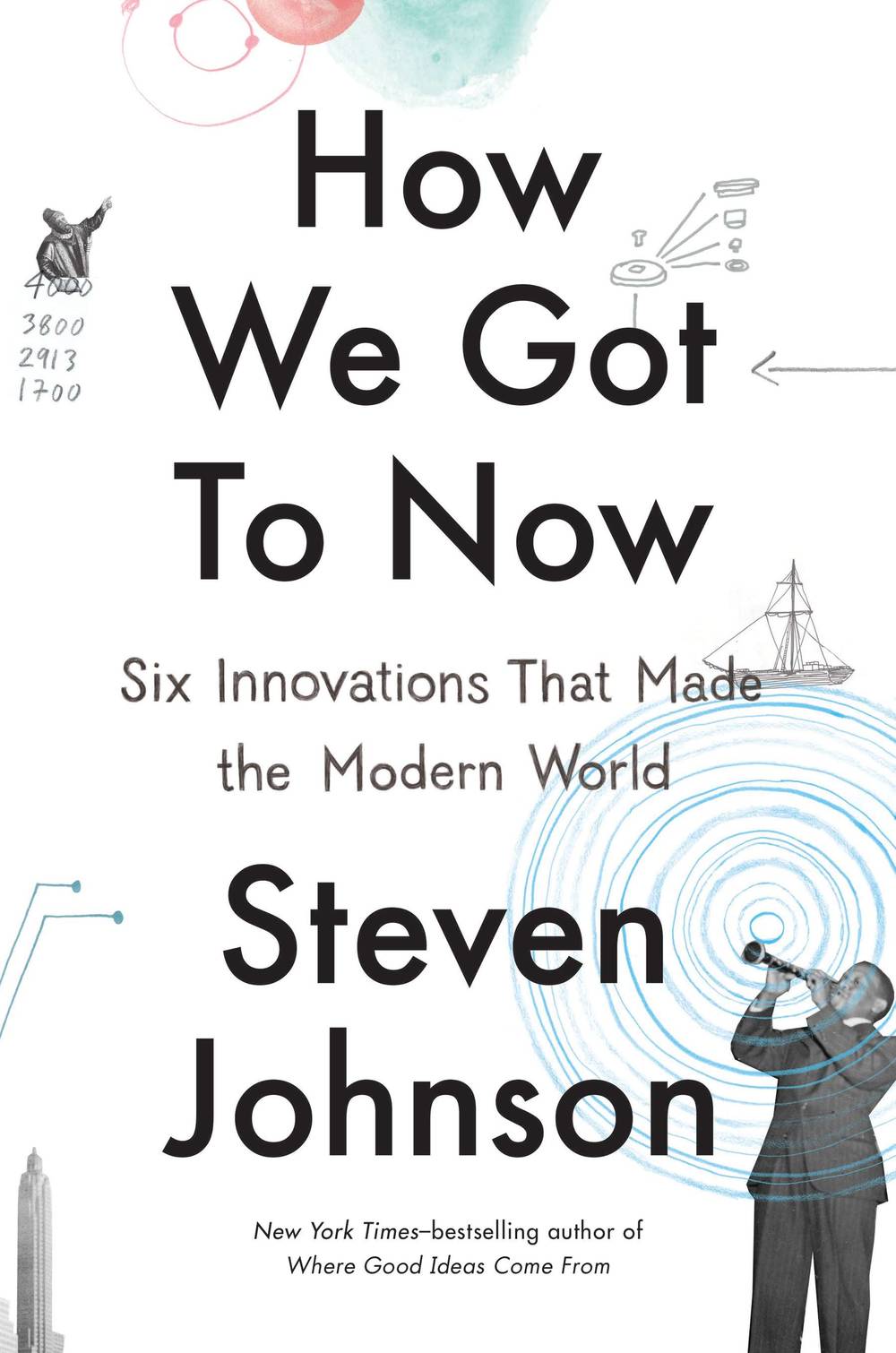
text, How we got to now, [WSJ review, NYT review] book-sized
this time but extremely entertaining, which raises nearly all the important
questions about innovation while being very accessible, a
compulsive, beach-compatible and exhilarating read.
Its author, Steven Johnson, a polymath with a literary
degree, has already written several popular books about the history of
technological innovation, but this one, companion to a PBS series, is the most thought-out and pedagogical. If I was still teaching, it would be on the top of the required holiday
readings list for students, probably together with Tim Harford's Adapt.
Highly recommended.
Thursday, 27 November 2014
Misunderstanding China, an ongoing topic
China is very
large by most geographical standards. It is the most populous country on the
planet. It now has arguably the largest single national economy - besides
having an extremely ancient and distinct culture. So, well, it sort of does
matter.
So, you
would think that basic facts about China would be rather well known.
Think
again. Misunderstanding it seems to be one of the most commonplace things on earth.
Everyday journalists, politicians of all hues, academics of every possible kind
of tenure, plus a huge number of self-declared pundits sprouting every kind of improbable
brain colour or texture, brandish unchecked facts and gratuitous theories about
China without having even bothered to check the country's all-important demographics
and having tried to understand what they actually mean.
I was especially
reminded of this yesterday when, looking for something that would fit into my new
treadmill's narrow pulpit, I took out from a dark corner at the bottom of my
shelves a book from 2005, which I had once unwisely bought on the strength of
its enticing title (What Does China Think?)
and of its flip-jacket recommendations (notably Chris Patten's - may he be
cursed for an appropriate number of generations) then soon banished to down there.
It
perfectly exemplified that what most "experts" fail to understand is
that China will be old before it actually gets rich. Because they have not even
heard of basic economic growth theory and, most of the time, do not even know
what a partial derivative is (which makes them unable to understand the concept
of productivity), nor have looked at what spectacularly happened to Japan post-1990 (blue line), or is
now happening to Europe (green) though less to the more adaptable US (brown),
they cannot
conceive that China's technocratic leadership, in front of all that well-grounded
evidence, decided long ago that what really mattered was maximising per capita
GDP in 2022 or whereabouts, when what is usually known as the 'Lewis turning point' is scheduled to occur:
(This last graph is from one of Bei Xu's numerous papers for Natixis on the Chinese economy, all of them greatly recommended).
So, yes, China is in a hurry to get rich and powerful - before declining, as a country's total factor productivity is unambiguously negatively linked to population ageing.
This being a heavily managed economy, where local authorities play the role venture capitalists and institutional investors play in genuine market economies, there are thus probably no worries to be had about Chinese economic growth in the next few years - though the obvious danger is that they try to artificially beef up growth in the run-up to 2022, a bit like what Japan spontaneously did in the run-up to 1990, to disastrous later effects.
As to why today's China - in spite of its huge frustraded hordes of angry nationalist young males created by the single child policies - is so unagressive compared to what Wilhelmine Germany used to be at a comparable economic development stage a hundred years ago, look no further: China could sure enjoy the sound of marching boots today and bask in an orgy of nationalism, but in 20 years' time, it will have to rely mostly on slipper-wearing pensioners for its defense. No enticement to go out, conquer and make enemies there.
Having at last renounced Twitter and all his works and pomps, I will now endeavour to start posting seriously again on selected financial and economic misconceptions, a bottomless treasure trove of topics. I do apologize for the 18 month hiatus to the surprisingly high number of you that, according to Google, seem to have bothered to check this soon abandoned blog. I had no idea.
Sunday, 17 March 2013
After Cyprus: what time the short squeeze?
There has
been for the last 24 hours widespread hysteria among the commenting classes
about the supposed Lehman II, The Sequel-type
significance of the 6.5% to 9.9% haircut imposed this week-end on Cypriot account holders.
According to their myopic and apocalyptic reading, a moderate haircut on a few people who were getting large deposit rates (6% etc) for the best part of the last 3 years in order to compensate for the obvious and well-known risk of leaving their money in long-economically bankrupt Cypriot banks, will in fact trigger the mother of all bank runs in Southern Europe.
Obviously,
the fact that the Eurozone crisis is foremost
a political and institutional crisis, not a financial one, has been lost on
them. I can understand the boringly traditional - I have seen it at work so
many times - North American incomprehension at the complicated workings of a
Continent with not one but - how mind-boggling! - several different national states.
This failure to encompass European political issues basically makes Americans today routinely
translate the Cyprus thing as the pan-European equivalent of the FDIC suddenly
closing down for the whole of the US.
Well, as those
guys probably will find out quickly enough next week, this ain't the US and this
ain't the FDIC. Sell on Monday morning and get short-squeezed by XXXday afternoon
is probably how it will run again, especially as the bank run in Southern Europe already happened a few years ago,
remember those Target 2 balances? And getting short on old news is one of the surest
recipes for disaster I know.
In fact,
the EU-wide decision of not getting European taxpayers to pay for the
governance-free, intentional free-riding of another midget-state is probably the best medium-term news to come out of Brussels for a long,
long time and shows some realism finally creeping into what has been so far
a globally denialist management of the crisis. It at last shows national states
that their responsibility actually starts somewhere and that not everything is
permissible for ever, a healthy warning.
Tuesday, 5 February 2013
Did I hear the words "exchange rate policy"?
A quick
reminder that anyone mad enough to want to meddle with the world's major
currency pair, the euro vs the dollar, ought to be locked up for life in a lunatic asylum.
The last
time a "concerted exchange rate policy" was put in place on the
dollar was at the Louvre agreement in February 1987. G7 countries decided then that
the dollar was "low enough" and that they would intervene if it did
go any further.
The problem
was that, in retrospect, it turned out to be not that low at all. And since it
was "blocked" on the way down, then something else had to give,
namely interest rates. So up they went. 10y
Treasuries, which yielded 7% in January, went down 17% in price, to a yield of
9.50% in late September. Then everything exploded and yields on Treasuries climbed
up to 11% intraday on October 19th, causing the Dow to drop by an unprecedented
22.5% on that day.
Friday, 25 January 2013
Poll shows that the core values of French society are 1) envy, 2) distrust, 3) greed and 4) xenophobia.
What a beautiful country! Le Monde commissioned a poll from Ipsos along lines not that different from those of the World Values Survey. Full results are available here (in French) and they sure are a depressing read. This, basically, is the same society that gave overwhelming support to Vichy France, there can be no mistake about it. Nearly 70 years of economic growth since the end of WWII have brought just one small change, namely which semitic people the French have decided to hate: Jews are now sort of OK but Muslims (a nickname for Arabs) are the new arch-enemy.
While other societies can have greed without too much envy, the latter here is foremost. The French profess to hate money and take a moralising view towards it: 82 % agree to the proposition that "money has corrupted the traditional values of French society". But that is just about other people's money since
- 71 % of them also agree to the proposition that "it is a good thing to want to earn a lot of money"
- 58 % agree to "in order have social justice, money should be taken from the rich and given to the poor".
Please note that those who agreed to both propositions (up to 13% of French population) look like sort of uneasy about their relative status (too poor to be taxed or too rich to be left untaxed). I can't help but wish them an uneasy sleep...
Also, but that's nothing new, 78% distrust deeply other people - though only 62% think their politicians are corrupt. So that should indicate that they think that ordinary people are more corrupt than politicians. And then, 65% want to increase the power of French politicians over Brussel's... A logical bunch they sure are.
And as to foreigners, 70% think there are "too many of them in France" although France is quite below the European, let alone OECD, average for the proportion of foreign-born residents. Particular spite is directed toward Muslims, which 74% deem intolerant.
Oh, and 87% think France needs a strong leader to put everything back in order. Marshall Philippe Pétain was not immediately available for comment.
Wednesday, 23 January 2013
50 years of Françallemagne
The Elysée
Treaty turned 50 this week, a grand occasion for official hypocrisy, reporting
ineptitude and a garish mixture of flonflons
and umpah. Here is my attempt to make some sense of what is being celebrated.
France
always tried to think of itself as a Great Power on the world stage, which is
all the more surprising since it spent
most of its modern life as clearly the underdog in the (numerous) fights it picked up: with
the Habsburgs in the 16th and 17th centuries, with Britain in the 18th century,
with everyone in Europe under Napoleon and finally, to tragic consequences, with
Germany after 1870, a silly border dispute that caused two world wars and
resulted in 60 million deaths or so.
But then,
in under twenty years, in spite of all the noise it kept making, it clearly
became a dwarf in international politics. There were three
stages in that fall:
- first, 1940-45, when its legitimate
government, Vichy's Etat français,
sank into collaboration with Nazi Germany before being swept away with it.
To cover-up, De Gaulle started the official lie that France was part of
the victors, with a seat on the UN's Security Council, which prevented
France from looking hard at its fabric and has greatly concurred to
keep-it reform-free.
- second, Suez in 1956, when the United
States told it, as well as Britain and Israel, to pack up their field
victory, go play in their room and stop bothering grown-ups. Suez was a defining moment for all three countries,
all of them wowing for such a thing to nether happen again to them, but choosing
widely different paths towards that goal. Britain and Israel cozied up to
the US, hence the "special relationship", while France decided to
go it alone and build its own nuclear might.
- and finally when it gave up the last remnant
of its colonial Empire, Algeria, in 1962. It was then left as a moderately
significant European country, a tad larger than the European average, for
sure, but with little real clout left.
Nevertheless,
it went on pretending being a world power, thanks to two crutches:
- blackmailing the US, a "bribe me or
else" strategy initiated by De Gaulle, which was particularly
effective and credible in view of the impressive size of the "enemy
within" in France, namely a huge and highly organized French Communist
Party, which used to and collect between 20 and 25% of the popular vote and
to this day has never been blacklisted by French society as an enemy of
democracy.
- making use to its own advantage of Germany's
terrible criminal record. In the 1950s, the FRG, slightly more populated than
France but economically much better organized, was denied a formal role in
international institutions because of its past. It desperately wanted a
new, clean reputation, and being friends with its former arch-enemy seemed
a no-brainer to that effect. Moreover it refused on principle, for commendable
therapeutic purposes, to do anything that could in any way remind of its
pre-1945 militarism. It was thus clearly anxious to acquire an ally that
could speak for it on the international stage and eventually use force,
which it had so thoroughly renounced. It thus went out of its way to
please France, claimed to be its equal or even its vassal, paid for every French
whim, even the most harmful (like the absurd Common Agricultural Policy, which
ate up most of the EU's budget for 35 years in subventions to mainly French
farmers and ... did in fact a lot of long term harm to France by keeping
its agriculture backward) and allowed France to continue to travelling
first class with a second class ticket both militarily and diplomatically.
Subscribe to:
Posts (Atom)